
What’s your name?
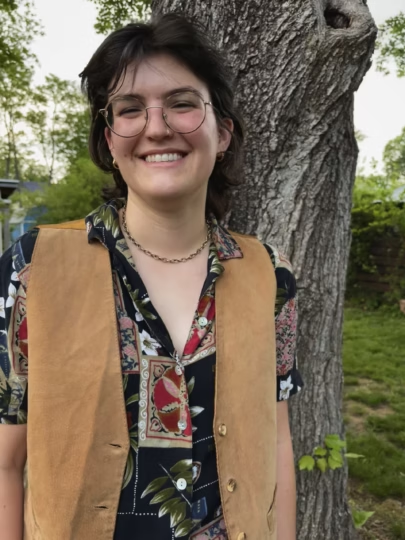
Noah French.
What’s your department?
I’m a fourth-year PhD student.
What’s your hometown?
Morristown, New Jersey.
How are you connected to TYDE?
I was fortunate enough to receive a TYDE student research grant to support my dissertation research. I also helped organize the “Digital Mental Health & LGBTQ+ Youth” summit, which TYDE co-hosted last year.
What is your research about? What parts of it are the most exciting to you?
My research uses data from smartphones and smartwatches to learn about the everyday stressful experiences of people with anxiety and individuals with marginalized identities. Right now, I’m most excited about my dissertation work, which is trying to understand how LGBTQ+ young adults are impacted by and manage their emotions around the stressful experiences in their lives. This is a very stressful time to be a Queer person given the current political landscape and rollback of rights for trans people. I’m hopeful that in a small way, this research can shed light on how recent events are affecting LGBTQ+ young people, and how mental health researchers and practitioners can best support them.
How do you use digital technology in your daily life?
There are a few smartphone apps I use regularly to support my wellness goals. I have used InsightTimer every day for the past several years to support my mindfulness practice. I am a big advocate of the “pomodoro technique” for chunking my time while working, and Focus Friend has been my go-to pomodoro timer app recently. It rewards you for working by allowing you to decorate the apartment of your virtual bean—I highly recommend!
In your opinion, what are the main challenges that young people face navigating the world of digital technology and/or social media?
For LGBTQ+ young people, the digital world can be a wonderful, affirming place to connect with other Queer youth, learn about identity, and explore their own identities. Especially for LGBTQ+ youth without supportive or affirming relationships with family or (in-person) friends, online spaces can be a lifeline and one of the few places they are allowed to be themselves.