
Published April 2026 | Youth-Nex
By Sania & Mariam, teen authors
This blog is the third of three in a series of posts focusing on youth mental health and school policies.
The Shift to Digital Assignments
An overlooked factor in declining youth mental health is the overuse and evolving nature of homework. The shift from paper to digital assignments has affected students mentally and physically.
During the COVID-19 pandemic, schools transitioned to online platforms. But even post-pandemic, online assignments remain dominant with many school districts reporting that the majority of academic work—including homework—is now submitted digitally, especially in one-to-one device environments.
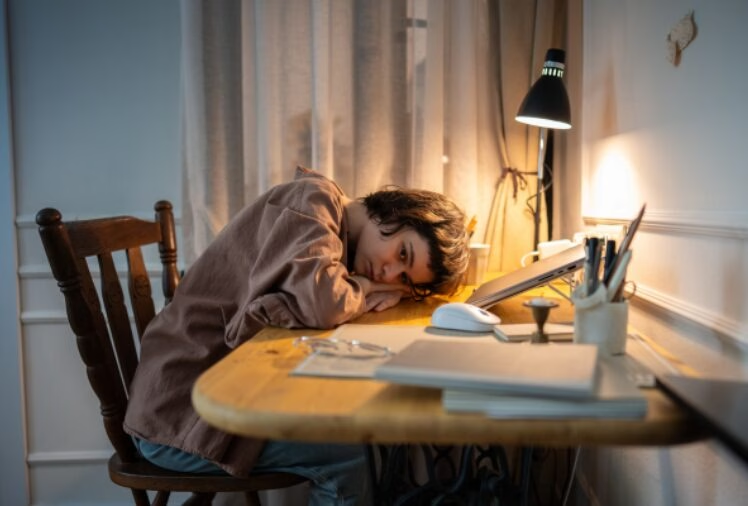
With screen time already high, added hours from online homework worsen the problem. Students often stay up late completing assignments on screens. Research suggests that use of these devices before bedtime prolongs the time it takes to fall asleep, delays the circadian clock, suppresses levels of the sleep-promoting hormone melatonin, reduces the amount and delays the timing of REM sleep, and reduces alertness the following morning.
Physical Strain & Time Demands
Online homework also harms physical health by reducing activity and encouraging poor posture. Students slouch over devices for long periods, causing muscle stiffness and back pain. Some research suggests that the use of a computer is associated with negative impacts in health-related quality of life for early adolescents. Back pain is becoming more common among young people due to extended screen use and desk work.
In addition to physical and emotional strain, the volume of homework contributes to mental overload. Many School Boards across the U.S., including Virginia, estimate, “Approximately 30 to 60 minutes per subject every other night for classes on a block schedule.”
With 8 classes and 4 meetings each day, students face 2-4 hours of homework nightly. This level of demand, combined with screen exposure and reduced rest, puts students under constant pressure.
A Call for Broader Awareness
Schools across the country are contributing to a decline in students’ mental and physical health through increased academic workload, evolving homework formats, and lack of awareness. Schools are providing valuable support services for students dealing with issues like bullying and diagnosed mental health conditions such as OCD, ADHD, and depression, but there appears to be a lack of targeted support for the issue that affects the majority of students: academic pressure and burnout.
With heavy homework loads, extracurriculars, and little time for rest, students face fatigue and develop mental health struggles like depression and anxiety. It feels like schools do not put enough effort into supporting the larger group of students or finding solutions like wellness groups focused on scholarly exhaustion.
Instead, the focus is often on policies that raise the district’s image for high-achieving students. But when those same students are pulling all-nighters and skipping meals to finish one final project—is it really worth it?
Better Responses & Prevention
Many school districts have seen an increase in students struggling with school anxiety, avoidance, and refusal. With rising mental health issues among youth, we need school districts not only noticing these behaviors but also actively responding to prevent further damage.
Is your school doing enough?
- Many schools have a Mental Health Team including counselors, psychologists, social workers, and student assistance specialists.
- Programs like anonymous reporting apps allow students to share safety concerns.
- Peer-led programs support students with suicidal thoughts, and initiatives that address bullying are common.
Though these programs help, it isn’t all we need. We need help on how to study right, manage time, cope with stress etc.

Sania is a high school sophomore from Northern Virginia with a strong passion for student mental health. She leads a mental health focused project in partnership with George Mason University and the University of Virginia to strengthen student well-being and foster supportive school communities. As a member of the Youth Research Council, she builds professional and research skills under the mentorship of researchers from George Mason University, Johns Hopkins University, and Georgetown University. She hopes to apply these research driven skills in the fields of health and medicine to support her community’s well-being while continuing her growth through TYDE at the University of Virginia.

Mariam is a high school sophomore in Northern Virginia and an International Baccalaureate (IB) diploma student. She is currently collaborating with researchers in GMU and programs at UVA on projects to spread awareness about student mental health, hoping to find solutions. She’s also a member of George Mason’s Youth Research Council (YRC) in order to expand on her research skills. As a founder and leader of the Muslim Student Association, a leader of her school’s Culture Club, and a member of the Health Research and Awareness club, she focuses on building strong and supportive communities. She hopes to study health, medicine, and business with the goal of creating proper accessible care and make a meaningful change.

